The National Taxpayers Union, a nonpartisan taxpayer advocacy group, is calling on Congress to re-examine the tax exemption of large, bank-like credit unions.
The issue briefing paper noted the trend of large credit unions acquiring community banks. For example, the National Taxpayers Union cited Lake Michigan Credit Union's acquisition of a southwest Florida bank, despite the credit union's headquarter being 1,000 miles away.
The National Taxpayers Union wrote: "Permanently taking taxpaying business entities off treasuries’ tax rolls and shrinking the tax base is a textbook example of poor tax policy."
The paper also pointed out the erosion of the credit union's field of membership as another reason for Congress to take a look at the credit union industry's preferential tax treatment.
In addition, federal credit unions are not required to file Form 990 to the Internal Revenue Service. The National Taxpayers Union believes that large federal credit unions should be subject to Form 990 filing requirements, just like other tax-exempt entities. Requiring large federal credit unions to files a Form 990 would result in greater transparency and accountability at these institutions.
Furthermore, the Form 990 "is the main enforcement mechanism to ensure compliance with Section 13602 of the Tax Cuts and Jobs Act, which requires a 21 percent excise tax on not-for-profit executive compensation above $1 million."
Moreover, the taxpayer group noted that federal credit unions are not subject to Unrelated Business Income Tax, because they are viewed as instrumentalities of the federal government. This allows federal credit unions to avoid paying taxes on profits that are not related to their core mission. For example, the paper notes that some federal credit unions have gotten into the commercial real estate business and are leasing out excess office space to other businesses. This activity is not part of the core business of federal credit unions and should be taxed.
The taxpayer group concluded that "[w]ith many credit unions growing significantly in both size and scope, it is time for Congress to reevaluate the tax exemption and other tax-related provisions governing credit unions."
Read the paper.
Showing posts with label Tax Exemption. Show all posts
Showing posts with label Tax Exemption. Show all posts
Wednesday, February 19, 2020

Tuesday, February 11, 2020
CU Tax Expenditure Is Almost $22 Billion over Next 10 Fiscal Years
The Office of Management and Budget estimated that the tax expenditure arising from the credit union industry's corporate income tax exemption is $21.878 billion for fiscal years 2020 thru 2029. The information appears in the Analytical Perspectives of the President's Budget.


Friday, October 18, 2019
Harris Poll: Most Americans Support Taxing Large Credit Unions
A majority of Americans across all political parties said they would support ending federal and state tax exemptions for large credit unions, according to a Harris Poll survey commissioned by the Florida Bankers Association.
Sixty-eight percent of those surveyed agreed that a tax exemption for these institutions was unfair, and 70 percent said they would support congressional action to require credit unions with more than $500 million in assets to pay income taxes.
Three-fourths of respondents also agreed that tax-exempt institutions should not be permitted to acquire local community banks.
The poll also showed opportunity for more consumer education about the credit union tax exemption, with just 18 percent of respondents correctly stating that credit unions are tax-exempt. Thirty-seven percent believe credit unions do pay taxes and 45 percent were unsure.
Harris Poll surveyed 2,040 U.S. adults ages 18 and older, of which 1,668 are registered voters. The survey was conducted from September 26 thru September 30.
Read more.
Sixty-eight percent of those surveyed agreed that a tax exemption for these institutions was unfair, and 70 percent said they would support congressional action to require credit unions with more than $500 million in assets to pay income taxes.
Three-fourths of respondents also agreed that tax-exempt institutions should not be permitted to acquire local community banks.
The poll also showed opportunity for more consumer education about the credit union tax exemption, with just 18 percent of respondents correctly stating that credit unions are tax-exempt. Thirty-seven percent believe credit unions do pay taxes and 45 percent were unsure.
Harris Poll surveyed 2,040 U.S. adults ages 18 and older, of which 1,668 are registered voters. The survey was conducted from September 26 thru September 30.
Read more.
Thursday, October 17, 2019
Tax Foundation Calls for Repeal of CU Tax Exemption
The credit union industry has strayed from its original tax-exempt purpose and its tax exemption can no longer be justified, according to a research note published on October 16 at the nonpartisan Tax Foundation.
“Ending the exemption would make the tax code more efficient and provide lawmakers with revenue that could be used to offset other improvements in the tax code,” Erica York, an economists at the Tax Foundation.
York noted that the credit union tax exemption was historically justified by three purposes: serving customers with a common bond and customers with moderate means, as well as providing services difficult to obtain at banks. She cited evidence showing the erosion of common bond, that credit unions are increasingly serving high-income customers and that their services now resemble those offered by banks.
“The tax exemption for credit unions is not justifiable under principles of sound tax policy, nor under the rubric that lawmakers have used in the past to evaluate the tax-exempt status of financial institutions,” she concluded.
Read the research note.
“Ending the exemption would make the tax code more efficient and provide lawmakers with revenue that could be used to offset other improvements in the tax code,” Erica York, an economists at the Tax Foundation.
York noted that the credit union tax exemption was historically justified by three purposes: serving customers with a common bond and customers with moderate means, as well as providing services difficult to obtain at banks. She cited evidence showing the erosion of common bond, that credit unions are increasingly serving high-income customers and that their services now resemble those offered by banks.
“The tax exemption for credit unions is not justifiable under principles of sound tax policy, nor under the rubric that lawmakers have used in the past to evaluate the tax-exempt status of financial institutions,” she concluded.
Read the research note.
Wednesday, October 9, 2019
Iowa Lawmakers Discuss Taxing CUs at State Level
State lawmakers highlighted the challenges of taxing credit unions at the state level at a banker convention.
According to BankBeat, a panel of lawmakers at the recent Iowa Bankers Association Annual Convention pointed out that state chartered credit unions could switch to a federal charter, if taxed at the state level.
The Federal Credit Union Act exempts federal credit unions from all state and local taxes, except property taxes.
Lee Hein, chairman of the House Ways and Means Committee, stated: "Credit unions have options. They can move to a federal charter, so that makes taxing credit unions not such an obvious solution."
Gary Carlson, chairman of the House Commerce Committee, commented: "If they all go to a federal charter, we do not achieve our goal of leveling the competitive playing field."
While I think the threat of switching charters for Iowa credit unions are overblown because the state charter is more liberal than the federal charter, this perceived threat shows that Congress needs to solve this issue.
Read more.
According to BankBeat, a panel of lawmakers at the recent Iowa Bankers Association Annual Convention pointed out that state chartered credit unions could switch to a federal charter, if taxed at the state level.
The Federal Credit Union Act exempts federal credit unions from all state and local taxes, except property taxes.
Lee Hein, chairman of the House Ways and Means Committee, stated: "Credit unions have options. They can move to a federal charter, so that makes taxing credit unions not such an obvious solution."
Gary Carlson, chairman of the House Commerce Committee, commented: "If they all go to a federal charter, we do not achieve our goal of leveling the competitive playing field."
While I think the threat of switching charters for Iowa credit unions are overblown because the state charter is more liberal than the federal charter, this perceived threat shows that Congress needs to solve this issue.
Read more.
Thursday, August 1, 2019
Policy Advocate Calls for Illinois CUs to Pay Their Fair Share of Taxes
Peter Prickett, President of Council for Sound Tax Policy, has called for credit unions, especially the largest, to pay their fair share of the tax burden in Illinois.
Prickett stated that most consumers don't see any differences between banks and credit unions. Credit unions offer the same products and services as banks. And the largest Illinois credit unions tower over the majority of community banks they compete with.
In an opinion letter, Prickett pointed out that if the 16 largest Illinois credit unions had paid their fair share in 2018, this would have resulted in $20 million to $27 million in additional tax revenues to the state.
Prickett noted that 3 of Illinois largest credit union have bought naming rights to sports stadiums and signed exclusive sponsorship deals with sports teams, but paid nothing in income taxes.
Pricket wrote that "Illinois taxpayers should consider whether now is the time to ... end the antiquated income tax exemption for credit unions in Illinois."
Read the Op-Ed.
Prickett stated that most consumers don't see any differences between banks and credit unions. Credit unions offer the same products and services as banks. And the largest Illinois credit unions tower over the majority of community banks they compete with.
In an opinion letter, Prickett pointed out that if the 16 largest Illinois credit unions had paid their fair share in 2018, this would have resulted in $20 million to $27 million in additional tax revenues to the state.
Prickett noted that 3 of Illinois largest credit union have bought naming rights to sports stadiums and signed exclusive sponsorship deals with sports teams, but paid nothing in income taxes.
Pricket wrote that "Illinois taxpayers should consider whether now is the time to ... end the antiquated income tax exemption for credit unions in Illinois."
Read the Op-Ed.
Monday, July 22, 2019
Opinion: Congress Should Address Large CU Unfair Tax Advantages and Increase Transparency
An opinion piece by Thomas Aiello in RealClear Markets called on Congress to address the unfair tax advantages of large credit unions, as they have strayed from their mission.
Aiello wrote that the industry's deferential regulator has turned a blind eye to large credit unions' abuses of their preferential tax treatment.
For example, Aiello noted that many of these large credit unions allow virtually anyone to join.
In addition, he pointed out that these big credit unions are buying taxpaying community banks, "permanently taking taxpaying business entities off treasuries’ tax rolls and shrinking the tax base." Aiello wrote this is a "textbook example of poor tax policy."
He called on Congress to require all credit unions to file Form 990s, as federal credit unions are not required to file Form 990s. He stated that the "Form 990 is the main enforcement mechanism to ensure compliance with Section 13602 of the Tax Cuts and Jobs Act, which requires a 21 percent excise tax on not-for-profit executive compensation above $1 million."
The op-ed noted that this preferential tax treatment should be retained for small credit unions with a limited common bond.
Thomas Aiello is a policy and government affairs associate with the National Taxpayers Union.
Read the opinion piece.
Aiello wrote that the industry's deferential regulator has turned a blind eye to large credit unions' abuses of their preferential tax treatment.
For example, Aiello noted that many of these large credit unions allow virtually anyone to join.
In addition, he pointed out that these big credit unions are buying taxpaying community banks, "permanently taking taxpaying business entities off treasuries’ tax rolls and shrinking the tax base." Aiello wrote this is a "textbook example of poor tax policy."
He called on Congress to require all credit unions to file Form 990s, as federal credit unions are not required to file Form 990s. He stated that the "Form 990 is the main enforcement mechanism to ensure compliance with Section 13602 of the Tax Cuts and Jobs Act, which requires a 21 percent excise tax on not-for-profit executive compensation above $1 million."
The op-ed noted that this preferential tax treatment should be retained for small credit unions with a limited common bond.
Thomas Aiello is a policy and government affairs associate with the National Taxpayers Union.
Read the opinion piece.
Monday, April 15, 2019
KBW Report Looks at Competitive Impact of CUs on Banks
A report, The Non-Bank Chronicles: The Rise of Credit Unions, by Keefe, Bruyette & Woods (KBW) examines the competitive impact of the credit union industry on banks.
KBW launched The Non-Bank Chronicles with the objective of examining various non-bank competitors, analyzing the scope and methods to which each competes, and how banks can effectively fight back to protect and profitably grow their market share.
The report notes that the credit union tax exemption affords credit unions considerable room to competitively price loan and deposit products, which has helped drive significant growth over the last several decades.
In fact, credit unions are the only non-bank competitor that can offer customers a federally insured deposit product.
Since 2005, credit unions have seen their market share of United States consumers steadily grow, with deposits expanding 108 percent from $578 billion to $1.2 trillion or approximately 9.2 percent of all federally insured deposits in the country.
According to a survey of 114 bank executives covered by KBW, 52 percent identified credit unions as the “greatest threat” to their ability to profitably grow in the future.
Moreover, 68 percent of the respondents indicated that they expect credit union market share to increase in future years.
Bankers noted that the most challenging areas from credit union competition are retail deposits, followed by retail lending. Unsurprisingly, 82 percent of respondents selected “rate offered on loans / deposits” as a credit unions’ top method of competing, followed by 54 percent indicating that loan structure is the second most likely form of competition.
The report also notes that credit unions are expanding into the commercial lending space, which poses a significant competitive threat to for banks with under $10 billion in assets. Eighty-nine percent of the bankers reported noticing an increase focus on small business customers over the last five years.
While KBW analysis found that credit unions offer better rates on loans and deposits, KBW noted that the recent improved profitability of credit unions could suggest the full tax advantage benefit is not being passed through to consumers.
KBW believes competitive challenges posed by credit unions can be added to the list of reasons supporting further bank consolidation.
Despite the challenges posed by credit unions to community banks, KBW does not expect any changes in the political status quo in the near term.
Read the report.
KBW launched The Non-Bank Chronicles with the objective of examining various non-bank competitors, analyzing the scope and methods to which each competes, and how banks can effectively fight back to protect and profitably grow their market share.
The report notes that the credit union tax exemption affords credit unions considerable room to competitively price loan and deposit products, which has helped drive significant growth over the last several decades.
In fact, credit unions are the only non-bank competitor that can offer customers a federally insured deposit product.
Since 2005, credit unions have seen their market share of United States consumers steadily grow, with deposits expanding 108 percent from $578 billion to $1.2 trillion or approximately 9.2 percent of all federally insured deposits in the country.
According to a survey of 114 bank executives covered by KBW, 52 percent identified credit unions as the “greatest threat” to their ability to profitably grow in the future.
Moreover, 68 percent of the respondents indicated that they expect credit union market share to increase in future years.
Bankers noted that the most challenging areas from credit union competition are retail deposits, followed by retail lending. Unsurprisingly, 82 percent of respondents selected “rate offered on loans / deposits” as a credit unions’ top method of competing, followed by 54 percent indicating that loan structure is the second most likely form of competition.
The report also notes that credit unions are expanding into the commercial lending space, which poses a significant competitive threat to for banks with under $10 billion in assets. Eighty-nine percent of the bankers reported noticing an increase focus on small business customers over the last five years.
While KBW analysis found that credit unions offer better rates on loans and deposits, KBW noted that the recent improved profitability of credit unions could suggest the full tax advantage benefit is not being passed through to consumers.
KBW believes competitive challenges posed by credit unions can be added to the list of reasons supporting further bank consolidation.
Despite the challenges posed by credit unions to community banks, KBW does not expect any changes in the political status quo in the near term.
Read the report.
Tuesday, April 2, 2019
Op-Ed Calls for the End of CU Tax Exemption
Congress cannot proclaim its support for community banks while allowing tax-subsidized credit unions to continue growing and competing against banks on a tilted playing field, Florida Bankers Association President and CEO Alex Sanchez wrote in a Fox Business op-ed.
“Congress cannot have it both ways, publicly proclaiming support for community banks while allowing corporate welfare for credit unions to continue,” he wrote. “Credit unions, awash in cash because of their tax-exempt status, are buying banks in cash deals. Since 2012, credit unions have purchased 29 banks.”
In Florida, Sanchez noted that since the beginning of 2018, credit unions have either bought or announced deals to buy seven banks, with four deals announced in 2019 alone.
Read the op-ed.
“Congress cannot have it both ways, publicly proclaiming support for community banks while allowing corporate welfare for credit unions to continue,” he wrote. “Credit unions, awash in cash because of their tax-exempt status, are buying banks in cash deals. Since 2012, credit unions have purchased 29 banks.”
In Florida, Sanchez noted that since the beginning of 2018, credit unions have either bought or announced deals to buy seven banks, with four deals announced in 2019 alone.
Read the op-ed.
Tuesday, March 19, 2019
CU Tax Expenditure Exceeds $24 Billion for Fiscal Years 2019 - 2028
The Office of Management and Budget estimated that the tax expenditure associated with exempting credit union income from corporate income taxes is $24.017 billion over the next ten fiscal years.
The following graph shows the annual tax expenditure for exempting credit union income from corporate income taxes for fiscal years 2019 thru 2028.

The following graph shows the annual tax expenditure for exempting credit union income from corporate income taxes for fiscal years 2019 thru 2028.

Friday, March 1, 2019
Credit Union Tax Subsidy Going to the Wealthy
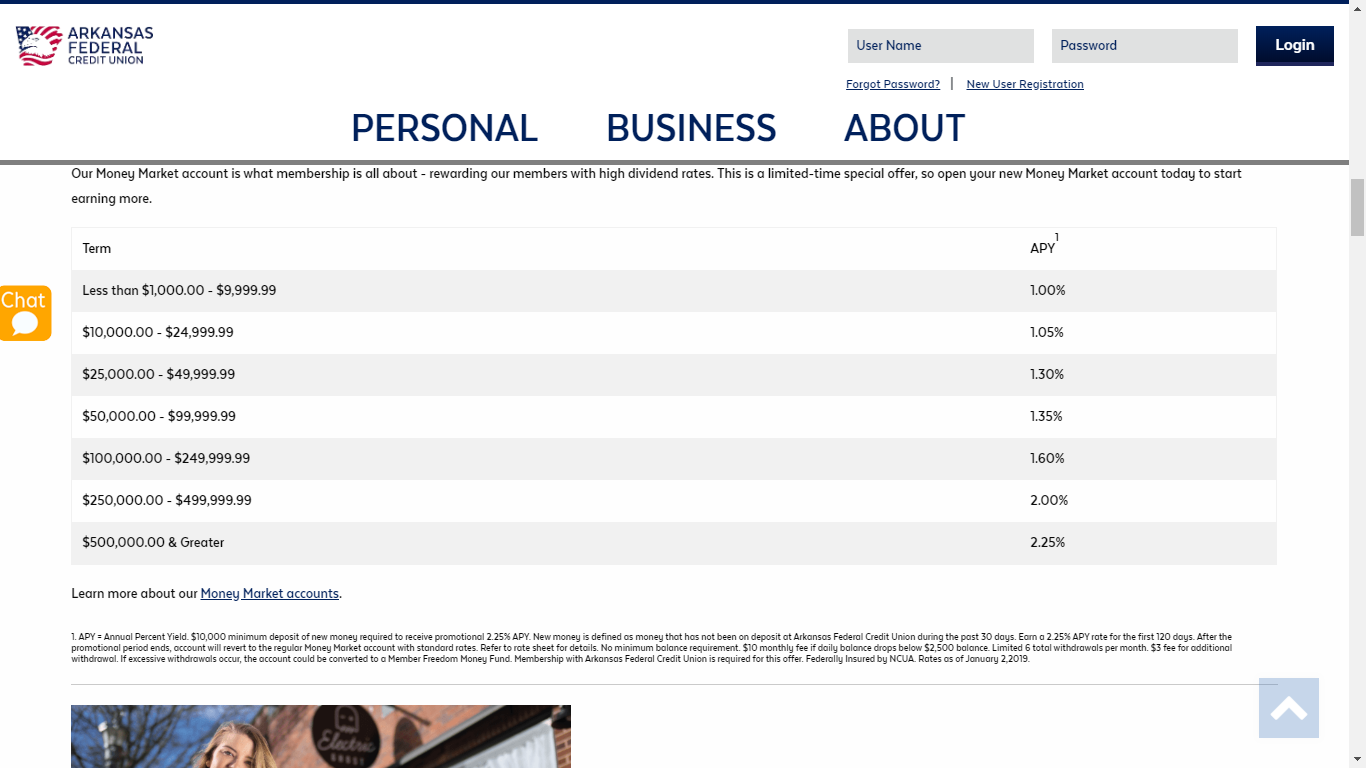
Arkansas Federal Credit Union (Jacksonville, AR) is rewarding large balance money market accounts (MMAs) with higher interest rates than accounts with lower balances.
The following table appeared in Arkansas FCU's January 2019 newsletter (click on image to enlarge). The credit union is paying an Annual Percent Yield (APY) of 2.25 percent on MMAs with balances of at least $500,000, while it pays an APY of 1 percent on accounts with balances between $1,000 and $9,999.99.

Part of this higher APY is to compensate depositors for risk with balances exceeding the insured deposit limit. But it also indicates that Arkansas FCU is targeting its tax subsidy at higher net worth individuals.
The following table appeared in Arkansas FCU's January 2019 newsletter (click on image to enlarge). The credit union is paying an Annual Percent Yield (APY) of 2.25 percent on MMAs with balances of at least $500,000, while it pays an APY of 1 percent on accounts with balances between $1,000 and $9,999.99.
Part of this higher APY is to compensate depositors for risk with balances exceeding the insured deposit limit. But it also indicates that Arkansas FCU is targeting its tax subsidy at higher net worth individuals.
Wednesday, February 27, 2019
PenFed's CEO Admits Anyone Can Join
In a January 25, 2019 opinion piece in Credit Union Times, James Schenck, President and CEO of Pentagon Federal Credit Union (McLean, VA), acknowledged that the credit union already had nationwide membership eligibility prior to its emergency merger with Progressive Credit Union (New York, NY).
The opinion piece was in response to banking trade associations criticisms of the acquisition of Progressive CU, which had an open charter, by Pentagon FCU (PenFed).
Schenck wrote:
In other words, PenFed's CEO is admitting that anyone can join.
This admission that anyone throughout the United States can join shows that the concept of common bond has become a joke.
This is just another example as to why policymakers should end the preferential tax treatment of large credit unions like PenFed.
Read the opinion piece.
The opinion piece was in response to banking trade associations criticisms of the acquisition of Progressive CU, which had an open charter, by Pentagon FCU (PenFed).
Schenck wrote:
Despite the criticism from bankers, PenFed already had nationwide membership eligibility through our existing field of membership, as well as a presence in all 50 states as a multiple-common-bond credit union.
In other words, PenFed's CEO is admitting that anyone can join.
This admission that anyone throughout the United States can join shows that the concept of common bond has become a joke.
This is just another example as to why policymakers should end the preferential tax treatment of large credit unions like PenFed.
Read the opinion piece.
Friday, August 10, 2018
Do Credit Unions Serve the Underserved?
A study by two professors at Nova Southeastern University found that underserved households are less, not more, likely to enjoy the services of credit unions.
Credit unions are exempted from federal taxation, because they have a public policy purpose to serve underserved consumers.
The study used data from the Consumer Finance Monthly (CFM) survey. The time period of the study was 2007 thru 2013.
A question in the survey asked respondents if they have a checking or a savings account. If they answer no, then they are treated as unbanked.
The paper found that only 4.3 percent of the respondents have a credit union membership, but are also unbanked.
According to the paper, more educated and well-off households have a higher likelihood of belonging to a credit union. This finding is consistent with credit union industry research.
The authors state that it is possible small, low-income credit unions may serve the underserved; but on average, credit unions do not.
The paper states that its findings indicate that "there is room for the government to fine tune its credit union tax exemption in order to ensure that subsidies flow to the needy rather than to the generally well-off."
Read the study.
Credit unions are exempted from federal taxation, because they have a public policy purpose to serve underserved consumers.
The study used data from the Consumer Finance Monthly (CFM) survey. The time period of the study was 2007 thru 2013.
A question in the survey asked respondents if they have a checking or a savings account. If they answer no, then they are treated as unbanked.
The paper found that only 4.3 percent of the respondents have a credit union membership, but are also unbanked.
According to the paper, more educated and well-off households have a higher likelihood of belonging to a credit union. This finding is consistent with credit union industry research.
The authors state that it is possible small, low-income credit unions may serve the underserved; but on average, credit unions do not.
The paper states that its findings indicate that "there is room for the government to fine tune its credit union tax exemption in order to ensure that subsidies flow to the needy rather than to the generally well-off."
Read the study.
Wednesday, August 1, 2018
PenFed "No Speed Limit"
The Wall Street Journal is reporting on the aggressive growth strategy of Pentagon Federal Credit Union (McLean, VA) to serve everyone.
James Schenck, chief executive of the credit union, mantra is "No Speed Limit." Pentagon Federal Credit Union (PenFed) has the goal of quadrupling it assets to $75 billion by 2025.
To help fuel its growth, "PenFed has acquired 13 smaller credit unions in a 20-month span between 2015 and 2017, before receiving a regulatory warning about new deals."
The article also points out that anyone can join PenFed by making a one time donation to two troop-supporting organizations. According to the credit union, less than one in five members joined this way.
This would suggests that approximately 300,000 members have been added via these two associations.
However, Robert Taylor, chief executive of Idaho State University Federal Credit Union (Pocatello, ID), worries that credit unions that engage in “expansionism for the sake of expansionism” risk the industry’s reputation.
It could also risk the industry's tax exemption.
Read the story (subscription may be required).
James Schenck, chief executive of the credit union, mantra is "No Speed Limit." Pentagon Federal Credit Union (PenFed) has the goal of quadrupling it assets to $75 billion by 2025.
To help fuel its growth, "PenFed has acquired 13 smaller credit unions in a 20-month span between 2015 and 2017, before receiving a regulatory warning about new deals."
The article also points out that anyone can join PenFed by making a one time donation to two troop-supporting organizations. According to the credit union, less than one in five members joined this way.
This would suggests that approximately 300,000 members have been added via these two associations.
However, Robert Taylor, chief executive of Idaho State University Federal Credit Union (Pocatello, ID), worries that credit unions that engage in “expansionism for the sake of expansionism” risk the industry’s reputation.
It could also risk the industry's tax exemption.
Read the story (subscription may be required).
Thursday, May 24, 2018
Public Policy Groups Defend CU Tax Status
Thirteen public policy organizations wrote Senate Finance Committee Chairman Orrin Hatch (R -UT) defending the tax status of credit unions.
The group stated that lawmakers should "be wary of any proposal that penalizes the millions of Americans who have chosen to join credit unions."
The letter also noted the importance of credit unions to our troops.
The group wrote: "The two largest credit unions do have substantial assets, but they are essentially limited to serving the families of active-duty military and veterans and some civilian defense employees."
The group concluded that the goal of free-market tax reform is to reduce or eliminate double-taxation and the committee should discard any proposal that would double tax certain types of financial institutions and their customers.
Read the letter.
The group stated that lawmakers should "be wary of any proposal that penalizes the millions of Americans who have chosen to join credit unions."
The letter also noted the importance of credit unions to our troops.
The group wrote: "The two largest credit unions do have substantial assets, but they are essentially limited to serving the families of active-duty military and veterans and some civilian defense employees."
The group concluded that the goal of free-market tax reform is to reduce or eliminate double-taxation and the committee should discard any proposal that would double tax certain types of financial institutions and their customers.
Read the letter.
Monday, April 30, 2018
Coalition Urges Senate Finance Committee to Examine Tax Exempt Status of Large CUs
The National Taxpayers Union along with other conservative public policy groups on April 24 wrote the Senate Finance Committee Chairman Orrin Hatch (R - UT) and the committee urging them to examine the tax exemption of large credit unions to ensure that these credit unions are adhering to the original intent of the statute.
The group expressed concerns that some of these large credit unions have strayed from their intended purpose.
The letter noted that many credit unions remain focused on their core mission, but some large credit unions operate like banks instead of credit unions.
The group wrote: "A tax exemption gives these select few credit unions a distinct edge over taxpaying banks and creates an uneven playing field, particularly over smaller community banks, which compete for similar customers."
The organizations stated that as credit unions evolve Congress should regularly review the governing tax and regulatory provisions to ensure that the tax exemption "is aligned with the intent of Congress and the interest of sound economic principles."
Read the letter.
The group expressed concerns that some of these large credit unions have strayed from their intended purpose.
The letter noted that many credit unions remain focused on their core mission, but some large credit unions operate like banks instead of credit unions.
The group wrote: "A tax exemption gives these select few credit unions a distinct edge over taxpaying banks and creates an uneven playing field, particularly over smaller community banks, which compete for similar customers."
The organizations stated that as credit unions evolve Congress should regularly review the governing tax and regulatory provisions to ensure that the tax exemption "is aligned with the intent of Congress and the interest of sound economic principles."
Read the letter.
Wednesday, April 25, 2018
Hatch Writes IRS Requesting Large or Complex FCUs File Form 990s
In a letter to the Acting Commissioner of the Internal Revenue Service (IRS) David Kautter, Senator Orrin Hatch (R - UT) called on the IRS to require "the largest federal credit unions or those with expanded commercial activities or fields of membership" to file Form 990 informational returns.
Currently, federal credit unions are exempt from filing Form 990 informational returns, in part because they are regulated by the National Credit Union Administration and are not subject to Unrelated Business Income Tax (UBIT).
Senator Hatch wrote that "federal credit unions have grown in size and complexity" and it is possible that the credit union tax exemption is no longer warranted for at least some credit unions.
Senator Hatch noted that it is the IRS' responsibility for monitoring and judging whether federal credit union activities still meet their tax exempt purpose.
Requiring large or complex federal credit unions to file Form 990 information returns would improve transparency and accountability, as the credit union business model has significantly evolved.
The filing of the Form 990 would provide needed insights into federal credit union activities and practices.
Read the letter.
Currently, federal credit unions are exempt from filing Form 990 informational returns, in part because they are regulated by the National Credit Union Administration and are not subject to Unrelated Business Income Tax (UBIT).
Senator Hatch wrote that "federal credit unions have grown in size and complexity" and it is possible that the credit union tax exemption is no longer warranted for at least some credit unions.
Senator Hatch noted that it is the IRS' responsibility for monitoring and judging whether federal credit union activities still meet their tax exempt purpose.
Requiring large or complex federal credit unions to file Form 990 information returns would improve transparency and accountability, as the credit union business model has significantly evolved.
The filing of the Form 990 would provide needed insights into federal credit union activities and practices.
Read the letter.
Friday, April 13, 2018
CUs Buying Banks Are Here to Stay, But Raise Policy Issues
The American Banker is reporting that a trend has emerged of credit unions buying banks.
In the first quarter of 2018, four such deals were announced. In comparison, six deals were announced during 2017.
Michael Bell, an attorney at Howard & Howard law firm who specializes in these transactions, estimates that there are approximately 150 credit unions with the capital, management experience, and desire to buy banks. He told the American Banker that he is currently working on 20 possible deals.
However, these transactions suggest that the lines of distinction between banks and credit unions are blurring and raise several issues that need to be addressed by policymakers.
Credit unions are exempt from federal income taxation. However, banks are subject to federal taxation. The acquisition of a bank by a credit union shifts income from a taxable base to a non-taxable base. If credit unions are using their tax-exempt status to buy taxpaying financial institutions, then this warrants policymakers revisiting the credit union tax exemption.
In fact, these transactions have attracted the interest of Senate Finance Committee Chairman Orrin Hatch (R - UT), who earlier this year wrote National Credit Union Administration Chairman McWatters questioning whether credit unions have outgrown their tax exempt status.
Credit unions are also exempt from the Community Reinvestment Act (CRA), while banks are not. These acquisitions may potentially create gaps with regard to service and lending to low- and modest-income consumers. The Government Accountability Office reported earlier this year that policymakers should consider extending CRA to credit unions, although the Treasury Department did not act on this recommendation.
Read the story (subscription may be required).
In the first quarter of 2018, four such deals were announced. In comparison, six deals were announced during 2017.
Michael Bell, an attorney at Howard & Howard law firm who specializes in these transactions, estimates that there are approximately 150 credit unions with the capital, management experience, and desire to buy banks. He told the American Banker that he is currently working on 20 possible deals.
However, these transactions suggest that the lines of distinction between banks and credit unions are blurring and raise several issues that need to be addressed by policymakers.
Credit unions are exempt from federal income taxation. However, banks are subject to federal taxation. The acquisition of a bank by a credit union shifts income from a taxable base to a non-taxable base. If credit unions are using their tax-exempt status to buy taxpaying financial institutions, then this warrants policymakers revisiting the credit union tax exemption.
In fact, these transactions have attracted the interest of Senate Finance Committee Chairman Orrin Hatch (R - UT), who earlier this year wrote National Credit Union Administration Chairman McWatters questioning whether credit unions have outgrown their tax exempt status.
Credit unions are also exempt from the Community Reinvestment Act (CRA), while banks are not. These acquisitions may potentially create gaps with regard to service and lending to low- and modest-income consumers. The Government Accountability Office reported earlier this year that policymakers should consider extending CRA to credit unions, although the Treasury Department did not act on this recommendation.
Read the story (subscription may be required).
Sunday, March 11, 2018
Tax Reform Has Eliminated the Case for CU Tax Subsidy
Scott Hodge, president of the nonpartisan Tax Foundation, wrote that with banks’ effective tax rates lowered by the recent tax bill, credit unions have even less of a case to remain untaxed.
“Credit unions were becoming anachronisms before the enactment of the [tax bill], but that status should be declared official now that the tax gap between banks and credit unions has effectively been closed,” Hodge wrote. “If they are going to act like banks and subsidize sports stadiums like banks, it is time that they paid taxes like banks.”
He also effectively rebutted credit union lobbyists’ arguments that taxing credit unions would cause losses of income tax revenue. “Such studies amount to one-sided accounting, ignoring the fiscal costs of the taxpayer subsidies to credit unions and the economic impact that their tax-advantaged competition has on taxpaying for-profit banks,” he wrote. “And, how is it that repealing the tax subsidy that is already costing the federal treasury some $36 billion over the next decade could ‘cost’ the federal government $38 billion? That makes no sense.”
Read the Real Clear market op-ed.
“Credit unions were becoming anachronisms before the enactment of the [tax bill], but that status should be declared official now that the tax gap between banks and credit unions has effectively been closed,” Hodge wrote. “If they are going to act like banks and subsidize sports stadiums like banks, it is time that they paid taxes like banks.”
He also effectively rebutted credit union lobbyists’ arguments that taxing credit unions would cause losses of income tax revenue. “Such studies amount to one-sided accounting, ignoring the fiscal costs of the taxpayer subsidies to credit unions and the economic impact that their tax-advantaged competition has on taxpaying for-profit banks,” he wrote. “And, how is it that repealing the tax subsidy that is already costing the federal treasury some $36 billion over the next decade could ‘cost’ the federal government $38 billion? That makes no sense.”
Read the Real Clear market op-ed.
Thursday, March 1, 2018
CU CEO: It Is Time to Tax Large Multiple Common Bond CUs
Nearly a month after Senate Finance Committee Chairman Orrin Hatch (R-Utah) wrote to the National Credit Union Administration questioning the federal tax exemption for the largest credit unions, one credit union CEO in an op-ed agreed that the time is now to explore taxation for those institutions.
In an op-ed in Credit Union Journal, Rob Taylor, president and CEO of Idaho State University Credit Union in Pocatello, Idaho, echoed Hatch’s concerns about large, multiple common bond credit unions that have been allowed to expand and, in many cases, compete with smaller credit unions. Often, these expansions are harmful to small credit unions “that have stayed true to their original fields of membership,” Taylor said.
He added that “the NCUA is contributing to this decline [in credit unions] with their laissez-faire approach to overlapping fields of membership.”
Taylor noted that most consumers already have access to a credit union given the broad availability of multiple common bond and community-chartered credit unions. Therefore, NCUA granting overlapping fields of membership should be rare and not a streamlined process.
“The problem with [the credit union] movement is most of us have been indoctrinated to believe our common enemy are bankers … when in fact the real threat to our future lies within our own industry,” he said. “I agree with Sen. Hatch that many larger credit unions operate in the same manner as taxable banks, and I believe it’s time for them to convert to bank charters and be taxed like the ‘big boys.’”
Read the op-ed.
In an op-ed in Credit Union Journal, Rob Taylor, president and CEO of Idaho State University Credit Union in Pocatello, Idaho, echoed Hatch’s concerns about large, multiple common bond credit unions that have been allowed to expand and, in many cases, compete with smaller credit unions. Often, these expansions are harmful to small credit unions “that have stayed true to their original fields of membership,” Taylor said.
He added that “the NCUA is contributing to this decline [in credit unions] with their laissez-faire approach to overlapping fields of membership.”
Taylor noted that most consumers already have access to a credit union given the broad availability of multiple common bond and community-chartered credit unions. Therefore, NCUA granting overlapping fields of membership should be rare and not a streamlined process.
“The problem with [the credit union] movement is most of us have been indoctrinated to believe our common enemy are bankers … when in fact the real threat to our future lies within our own industry,” he said. “I agree with Sen. Hatch that many larger credit unions operate in the same manner as taxable banks, and I believe it’s time for them to convert to bank charters and be taxed like the ‘big boys.’”
Read the op-ed.
Subscribe to:
Posts (Atom)